




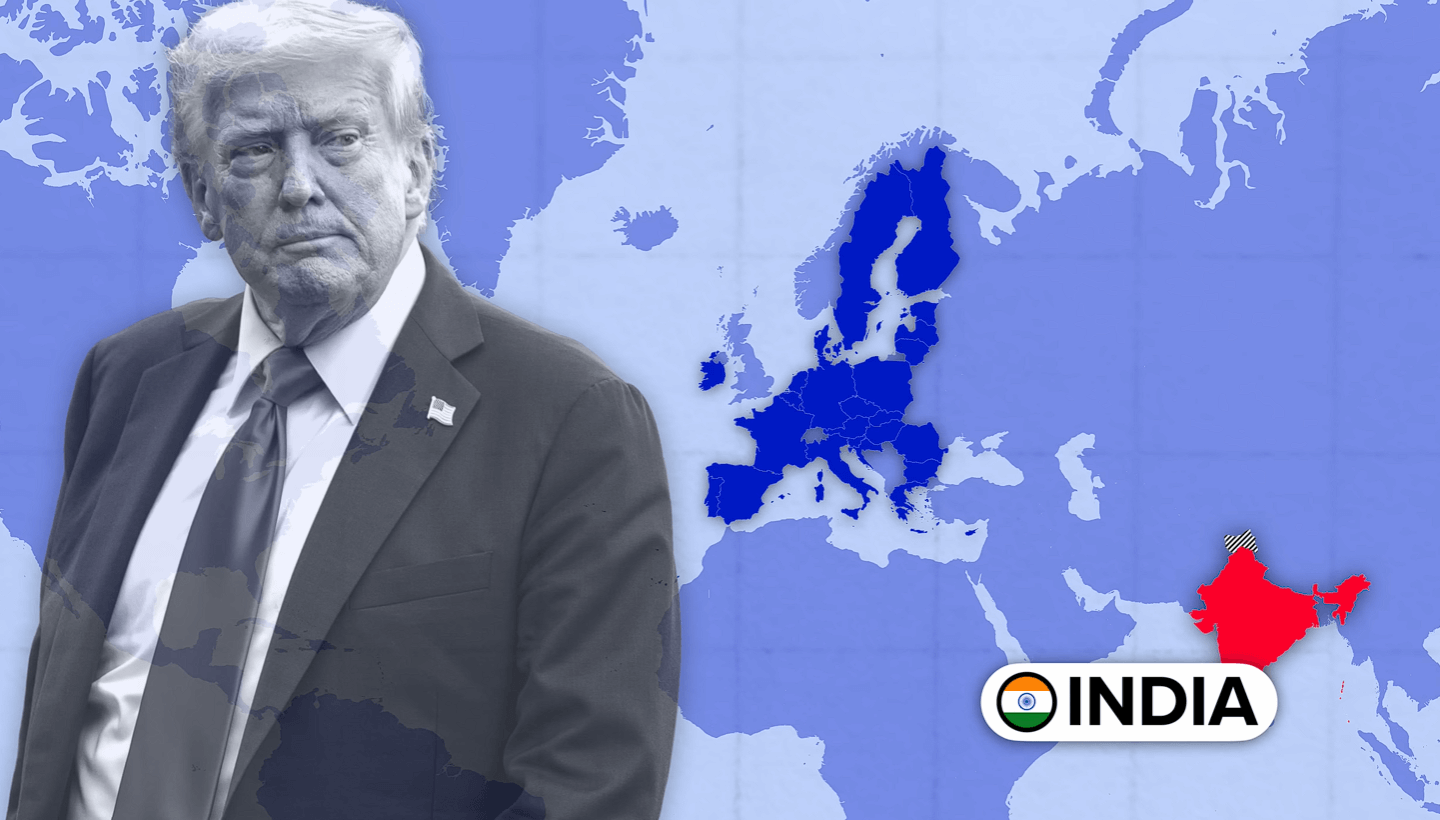
For nearly two decades, the EU and India have been negotiating a free trade agreement. Talks have proceeded sporadically, and until recently the deal appeared dead in the water. However, negotiations were revived in 2022 and have since gained momentum, partly due to Trump’s tariff-driven disruption of global trade, which has pushed countries, including India and much of Europe, to diversify their trading relationships. Reflecting this renewed momentum, German Chancellor Friedrich Merz recently suggested the deal could be signed by January 2026.
Negotiations originally began in 2007 but stalled in 2013, largely because India—then responsible for more than half of the developing world’s generic drug production—refused to accept EU drug patent rules. Talks were formally restarted in June 2022, reflecting political and economic shifts in both India and Europe.
In India, recent years have seen a renewed push for economic liberalisation, evidenced by a flurry of free trade agreements signed since the pandemic with partners including Mauritius, the UAE, Australia, the UK, New Zealand, and Oman. India also signed a free trade agreement with the European Free Trade Association states—Iceland, Liechtenstein, Norway, and Switzerland—in 2024, which entered into force recently and likely helped reinvigorate negotiations with the EU.
In Europe, the pandemic and Russia’s invasion of Ukraine heightened concerns about economic resilience and supply-chain dependence, making a deeper trade relationship with India—one of the world’s largest and fastest-growing economies—particularly attractive.
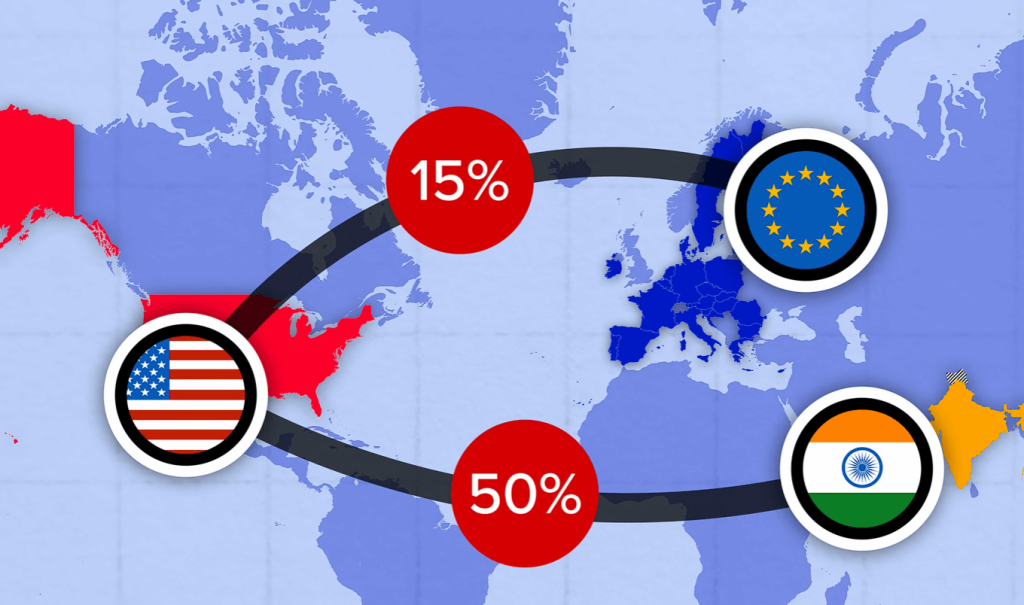
While negotiations progressed steadily after 2022, they accelerated following Trump’s return to office and his imposition of tariffs on both India and the EU. The US placed a 15% tariff on European imports and, in August, a 50% tariff on Indian imports, ostensibly in response to India’s purchases of Russian oil. India, however, was permitted to continue importing Russian oil under a sanctions regime designed by the Biden administration, making Trump’s criticism particularly galling.
These tariffs posed a serious risk to both economies, as the US was their largest export market. In 2024, India exported $88 billion in goods to the US—more than twice its exports to any other country—while the EU exported over $500 billion, also more than twice its exports to China. Reduced access to the US market has therefore encouraged both sides to seek alternative destinations, a gap an EU–India trade deal could help fill.
For the EU, the agreement would provide improved access to the heavily protected Indian market. According to WTO data for 2023, India’s trade-weighted average tariff rate stands at 12%, with tariffs exceeding 100% on many agricultural products and around 30% on most manufactured goods—far higher than the EU’s 2.8% average, or those of comparable economies such as China, Mexico, and Brazil. India would thus become a significant addition to the EU’s extensive network of trade agreements, which already covers most major economies apart from the US, China, Russia, and ASEAN.
Although most estimates suggest the deal would have only a modest short-term impact on EU GDP, this could change if India’s economy continues to grow at its recent pace. Since 2015, India has been the world’s fastest-growing major economy, with average annual growth of around 7%. If this continues, India could soon become the world’s third-largest economy, making preferential access increasingly valuable for European firms.
India, by contrast, has less to gain from tariff reductions, given the EU’s already low barriers. Instead, it is likely to prioritise reducing non-tariff barriers through regulatory alignment, including seeking accommodations on the EU’s carbon border tax, which India’s Minister of Steel has described as a greater threat to exports than Trump’s tariffs. India will also push for improved investment rules and greater mobility for Indian workers, although the EU’s ability to offer concessions on visas is constrained by member-state control.
If concluded, the agreement would signal a revival of the EU’s trade policy clout. Not long ago, internal divisions, an emphasis on values-based regulation, and a global shift towards protectionism appeared to have stalled the EU’s trade agenda. Trump’s return has helped reverse this trend. Since then, the EU has signed a deal with Mercosur, finalised an agreement with Indonesia, and launched or revived talks with the Philippines, Malaysia, Thailand, and the UAE—steps that could reduce Europe’s economic dependence on a US increasingly willing to weaponise trade.