




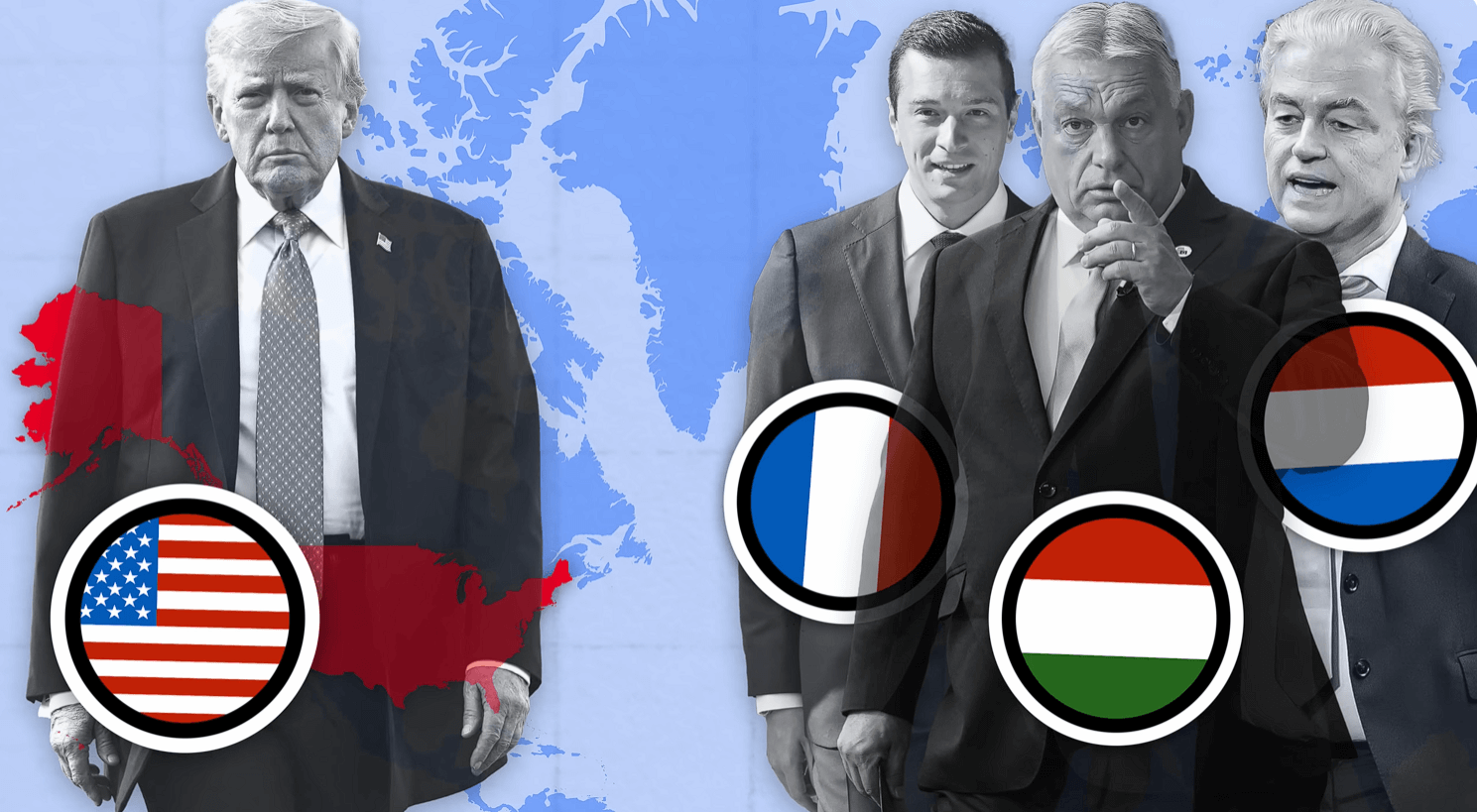
The return of President Donald Trump to the White House was initially celebrated as a triumph for Europe’s right-wing populists, who viewed an ally in the Oval Office as a means to bolster their influence within the EU. Nevertheless, Trump’s antagonistic attitude toward the US’s longstanding European partners, his recent involvement in EU affairs, and his imperialistic shift have compelled many right-wing European leaders to uncomfortably distance themselves from him.
During Trump’s 2024 presidential campaign, numerous European right-wing populists hastily sought to align with him, hoping that his resurgence would enhance their international profile and improve their domestic appeal. However, when Trump reignited his tariff conflict with the European Union last spring, that partnership began to appear politically expensive.
Although right-wing populists often advocate for protectionist policies in principle, Trump’s tariffs directly endanger Europe’s manufacturing sector—a backbone of numerous national economies and a crucial source of employment for the blue-collar voters these parties claim to represent. Polling reflected this unease.
A survey by the European Council on Foreign Relations indicated that in Germany, only 20% of those who supported the far-right AfD thought Trump’s election was beneficial for their country, while 47% deemed it detrimental. Similarly, in France among National Rally supporters, the divide was sharp: just 18% had a favorable view of Trump, contrasted with 43% who perceived him as harmful. Italy’s Prime Minister, Giorgia Meloni, among the few European leaders in Trump’s favor, characterized Trump’s tariffs as “a misguided decision” and expressed hope that they would be rescinded in negotiations with the EU.
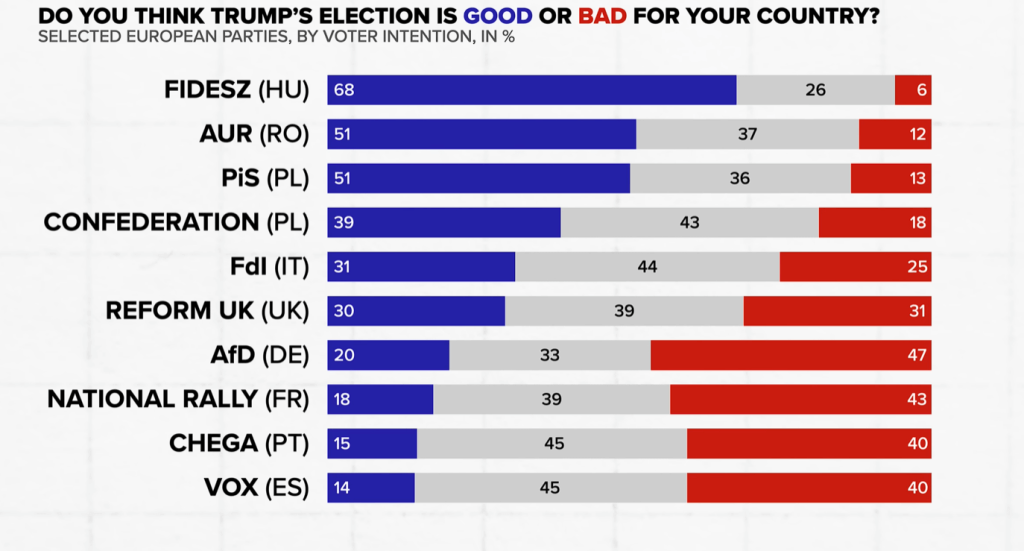
In a cautionary note to pro-Trump populists, Matteo Salvini initially attempted to champion Trump’s tariffs, claiming they might present an opportunity for Italian businesses, but quickly recanted following public backlash. Nonetheless, solidarity with Trump remained among a select group of populist leaders, especially in Eastern European nations like Hungary, Romania, and Poland, where Trump’s appeal endured remarkably.
Rather than blaming Trump for his hefty tariffs, these right-wing Eurosceptic factions criticized Brussels for failing to negotiate with him and boasted about their closeness to him as an advantage. The divisions regarding Trump among the European right became evident once more in December after the release of the Trump administration’s national security strategy document. One chapter, titled “Promoting European Greatness,” specified Washington’s intent to actively back far-right political movements throughout Europe.
For many far-right parties, the document was a welcomed validation. They interpreted it as a legitimization of viewpoints they have advocated for years: that the EU is a failing endeavor and that the continent is experiencing civilizational decline driven by migration, declining birth rates, and the erosion of national identities.
Germany’s AFD embraced the message vigorously. While Trump and the United States remained highly unpopular with the French populace, the National Rally mostly responded with silence. References in the strategy to direct US political meddling—especially Washington’s promise to nurture resistance to “correct” the EU’s trajectory—were particularly contentious.
For a party that has spent years rebranding itself as a defender of French sovereignty, overt alignment with an American president calling for intervention in European matters carried evident political risks. The Trump administration’s direct interventions in various nations, perceived by many as breaches of national sovereignty and international law, have strained relationships.
In summary, Trump’s policies have placed his ideological allies in Europe in a political quandary, partly due to a fundamental contradiction between their emphasis on national sovereignty and the Trump administration’s revealed belief that other nations’ sovereignty is dependent on American goodwill.