




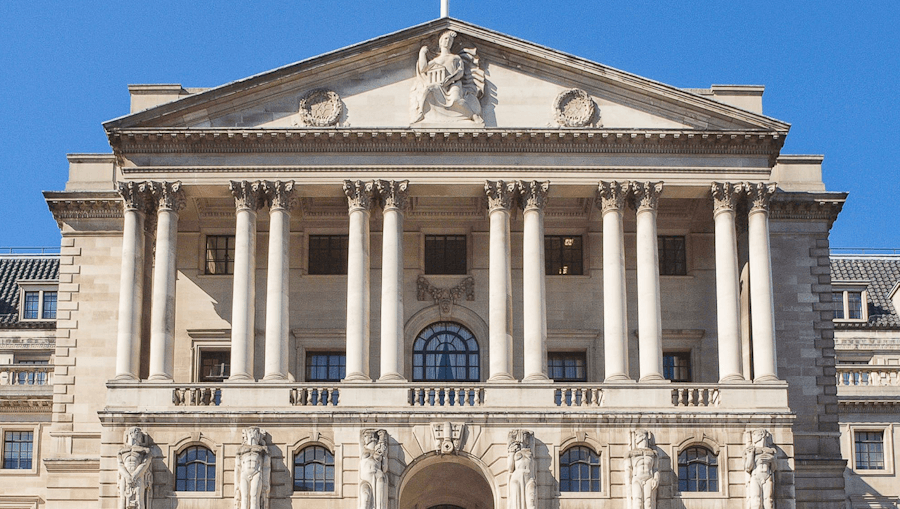
The Bank of England has issued a new Financial Stability Report, which it does every quarter or so. This one is important because it says one overwhelming thing: the risk environment around the UK economy has deteriorated.
And when people as conservative, as prudent, as cautious, and frankly as banker-like as the Bank of England say that the risk environment has deteriorated, it matters.
Their assessment is that global economic uncertainty remains high. Geopolitical tensions, trade fragmentation, and stressed sovereign debt markets are all increasing the probability of global shocks, in their opinion, whilst cyber risks are rising as geopolitics worsen. Most especially, they are worried about AI asset valuations.
So let’s start there.
As the Bank of England points out, current share prices for AI companies are near dot-com bubble levels in the USA. In the UK, share prices are at their highest level since the global financial crisis in 2008. So we are looking at comparisons either with 2000 in the USA or with 2008 here in the UK—and on both those occasions, share prices subsequently fell by around 40%.
What the Bank of England says is that a sharp correction—another way of describing a crash—is becoming increasingly plausible. They say this matters because AI infrastructure investment is now being financed by rapidly rising corporate debt. That could therefore give rise to a direct spillover into the banking market. The deepening link between AI firms and credit markets means losses could spread rapidly if anything goes wrong with AI investment.
In fact, they say a setback in any one part of the AI ecosystem could now ripple through interconnected lenders and investors in a way that is very hard to imagine, but which could be catastrophic.
This is making credit markets look fragile beneath the surface. Everything looks fine right now. There is a smooth situation, but corporate leverage is high. There are also weak loan underwriting standards at present, and complex and opaque structures are being used to facilitate finance in exactly the same way as happened before 2008.
In other words, everything that they saw happen before the global financial crisis is now happening again with regard to weak appraisal of lending situations, poor potential returns, and all of that being hidden within bank and other balance sheets through the use of complex legal structures. As a result, risk appraisal is now extremely difficult.
As they say, two recent high-profile debt defaults in the USA show how losses can suddenly hit multiple debt market participants all at once. Everybody in this sector is related. In other words, just as we discovered in 2008 when Lehman Brothers failed in September of that year, this is not an isolated system. One failure can tip over everyone else because every single participant in the banking, finance, and related sectors is part of a single web of interconnected funding.
What the Bank of England is saying is that, in this situation, investors must understand their real risk exposure and not rely on credit ratings that have recently proven too slow to react.
Again, they are flagging up something we already know is a real risk. In 2008, markets failed because credit rating agencies said banks were stuffed full of high-quality debt. It turned out to be largely worthless. The Bank is clearly indicating that this risk is present once again.
They are also flagging something else, and this cannot be emphasised enough. Last time, the problems were largely in the banking sector, but this time they are also in what we should properly call the shadow banking sector: private equity, private credit, associated insurance operations, and hedge funds.
These have expanded massively since 2008. And this is the key point the Bank of England makes: they have never been through a macroeconomic downturn of this potential size before. In other words, while the Bank of England knows there is a risk, even they have not fully appraised the possibility that it could be the private-equity shadow banking sector that brings markets down this time.
Effectively, they are admitting that, in the face of this potential crisis, they are flying blind.
They also note that many governments already have high debt-to-GDP ratios, limiting their capacity to borrow. This is made worse by demographic change and rising defence spending pressures, which mean that fiscal capacity to extend further funding to the banking sector—should it collapse again—may be limited.
In all of this, the Bank of England says the UK is highly exposed to global contagion.
The risk is that if banks panic—and banks do have that habit—they could resort to the most destructive forms of reaction possible, including fire sales and reducing access to finance for households and businesses. This would happen at precisely the point when such actions would be most damaging, reinforcing the scale of a downturn at the very moment households and businesses most need credit.
In other words, the Bank of England is saying that the risk of panic and financial meltdown is rising sharply.