




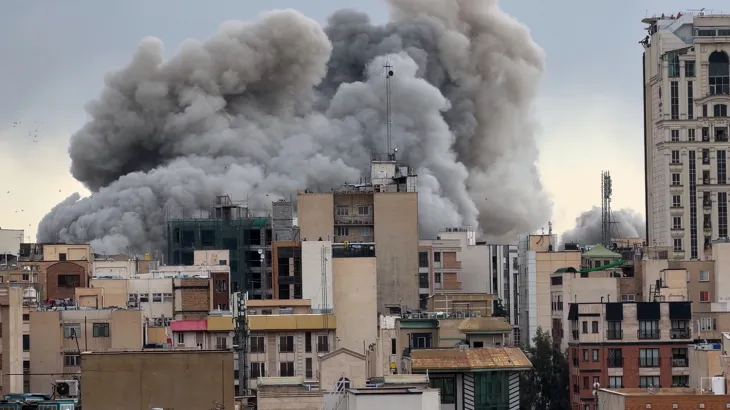
Just 48 hours ago, the mood in neoconservative circles in Washington was triumphant. In what supporters described as a stunning display of American and Israeli military power, the Iranian regime appeared badly shaken by a sweeping opening strike early Saturday morning.
Within a day, optimism about a rapid diplomatic breakthrough began circulating in political and media circles. Reports suggested Tehran might be open to resuming talks, and President Donald Trump fueled that perception in an interview, saying, “They want to talk.”
By Monday, however, that sense of momentum had evaporated.
Iran’s newly formed interim leadership council signaled it was not prepared to return to negotiations. In an interview with ABC, Iran’s foreign minister was blunt about Tehran’s reluctance.
“Well, uh, you answered this question. We negotiated with the United States twice in the past 12 months and in both cases, they attacked us in the middle of uh, negotiation and that has become a very bitter experience for us,” he said.
Conflict Spreads Across the Region
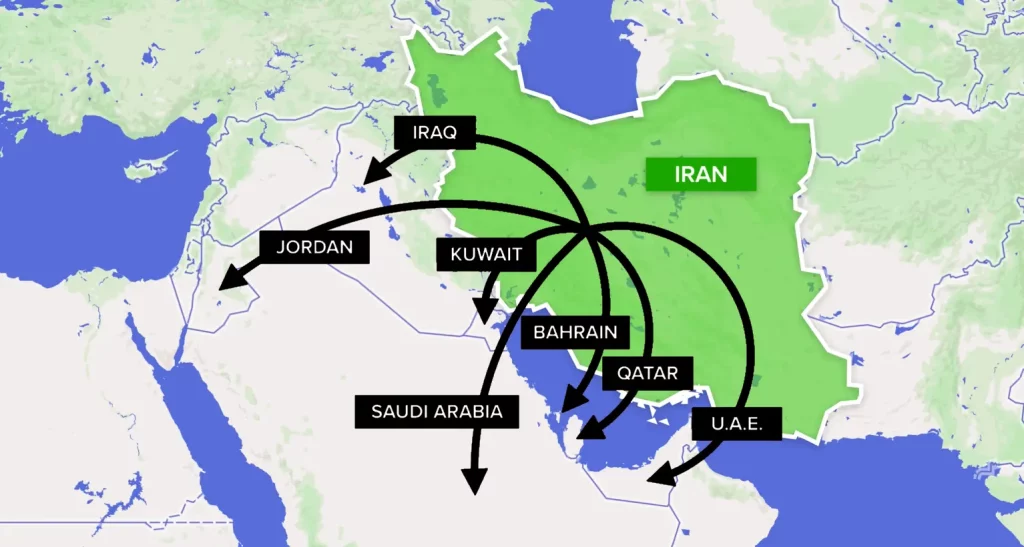
At the same time, the fighting intensified. Iran launched strikes at targets in multiple neighboring Arab countries. Fresh clashes erupted between Hezbollah and Israeli forces along Israel’s northern frontier. Reports of American casualties and downed aircraft added to the sense of a widening war. Oil prices surged, and global stock markets tumbled amid fears of prolonged instability in the energy-rich region.
Before the conflict escalated, many foreign policy analysts had assumed Iran would focus retaliation primarily on Israel, as it had during last year’s brief confrontation. That earlier episode saw limited exchanges and carefully calibrated signaling intended to avoid broader escalation.
This time, however, Tehran’s strategy appears different. Rather than concentrating its response narrowly, Iran seems intent on widening the theater of conflict, striking across the region and raising the economic and political costs for Washington and its allies.
Some analysts say the shift reflects Iran’s military constraints in a direct confrontation with Israel and the United States. By spreading attacks across several countries, Tehran may be attempting to strain U.S. defensive resources and pressure regional governments that had quietly urged Washington to avoid war.
The risk, however, is that broader attacks could draw additional states into the conflict, transforming a bilateral confrontation into a regional coalition effort.
Trump’s Calculus
On the night of the 2024 U.S. election, Trump told supporters that God had spared his life during an earlier assassination attempt “for a reason.” Since Saturday’s strikes, he has framed the conflict not only as a military campaign but as a moment of potential political transformation inside Iran.
In a recorded address posted Sunday evening, Trump directly appealed to Iran’s security forces.
“I once again urge the revolutionary guard, the Iranian military police to lay down your arms and receive full immunity or face certain death. It will be certain death. Won’t be pretty. I call upon all I radiant patriots who yearn for freedom to seize this moment to be brave, be bold, be heroic, and take back your country. America is with you. I made a promise to you and I fulfilled that promise. The rest will be up to you, but we’ll be there to help. Thank you. God bless you to our incredible warriors. And God bless the United States of America. Thank you.”
The administration’s apparent hope has been that either a popular uprising would destabilize Iran’s leadership or that a more pragmatic successor might emerge willing to negotiate.
So far, neither outcome appears imminent.
Despite prior episodes of domestic unrest in Iran, there have been no visible signs of mass protests since the latest strikes began. Political analysts note that external military pressure often produces short-term unity rather than fragmentation within targeted states.
Meanwhile, Iran’s leadership has reconstituted itself quickly. Officials have indicated no willingness to concede under pressure, and public statements emphasize resistance rather than compromise.
Negotiations in Doubt
The central obstacle to renewed diplomacy appears to be trust. Iranian officials argue that previous negotiation efforts were undermined by military action, making new talks politically untenable.
If negotiations are off the table, the conflict’s endgame becomes less clear. Wars can conclude through exhaustion, outside mediation, or dramatic shifts in battlefield realities. Absent those factors, prolonged confrontation becomes more likely.
With energy markets rattled and regional tensions mounting, international actors may seek to broker de-escalation. For now, however, the swift resolution envisioned by some over the weekend looks increasingly remote.
As one diplomatic observer put it privately, the early confidence in Washington has given way to a far more sobering realization: wars that begin with shock and awe rarely end on schedule.