




The 15th of March 2026 marked a historic day as oil aboard the Pakistani-owned tanker Karachi passed safely through the Strait of Hormuz—denominated not in U.S. dollars, but in Chinese yuan. That same day, another vessel also passed through carrying crude on a yuan-aligned route.
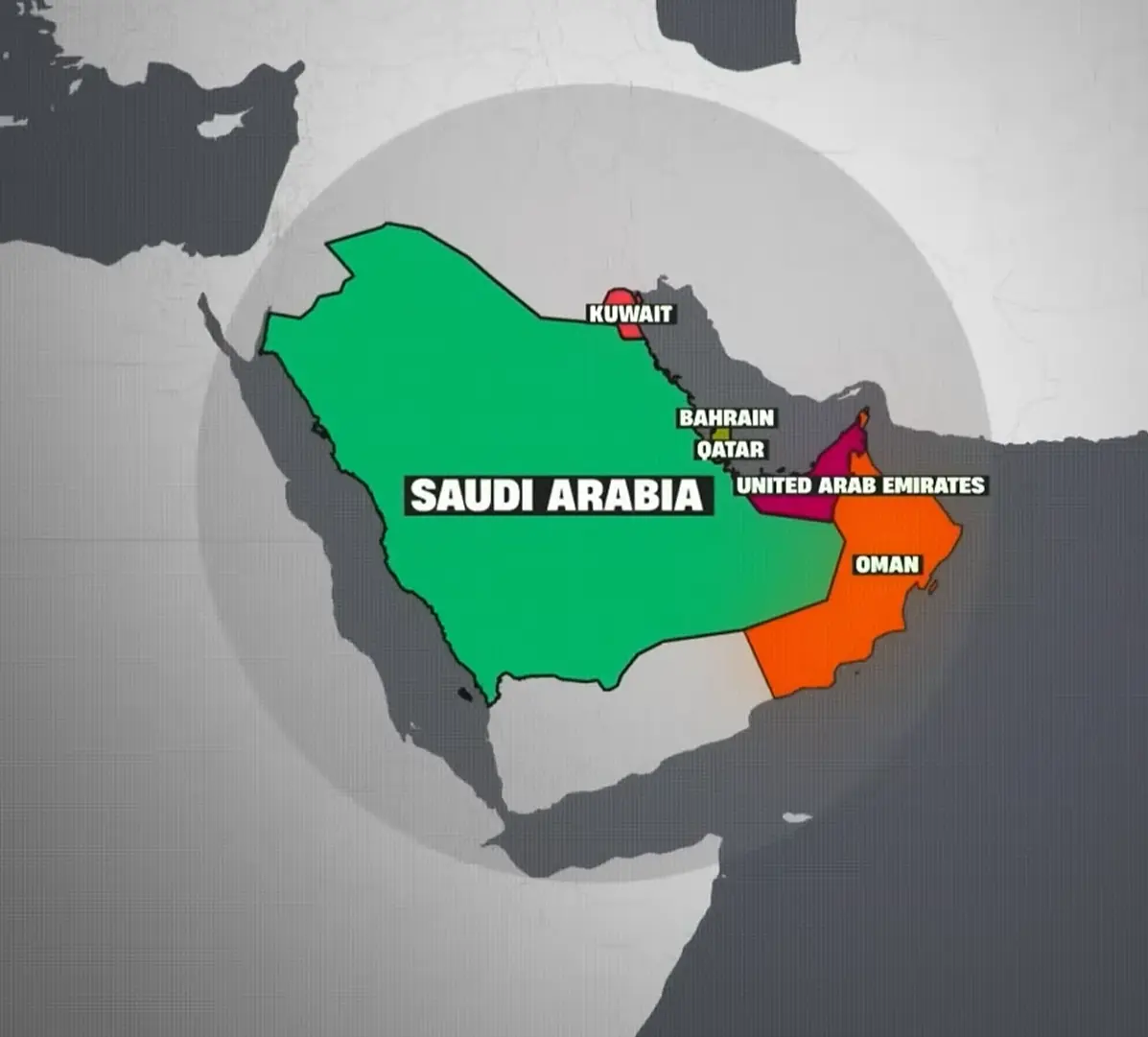
This challenges an agreement that has long underpinned the foundation of America’s economy: the petrodollar system. In return for American protection, Saudi Arabia, Kuwait, Bahrain, Qatar, the United Arab Emirates, and Oman agreed to support U.S. interests and sell their oil in dollars. But a deal that was supposed to secure American dominance instead handed a small group of countries extraordinary leverage over the most powerful nation on Earth.
Rising Tensions in the Gulf
Since the U.S. and Israel allegedly wiped out Iran’s supreme leader, a wave of attacks has spread across the region. The Gulf states did not sign up for this. For 50 years, their deal with America has held. But now, for the first time, the very countries propping up the American economy are watching the terms of that bargain begin to unravel.
So what happens if they decide to stop playing along? It may not lead to an immediate collapse, but rather a slow bleed—one that could eventually bring America’s era of global dominance to an end.
How the Gulf States Built Their Power
To understand how a handful of desert states gained this much leverage, you have to look at what they’ve built—and how quickly it could fall apart. Over the last century, the Gulf states have undergone a massive transformation, largely driven by oil. First discovered in Bahrain in 1932, oil production spread rapidly across the region. By the 1990s, oil wealth had completely reshaped these nations. Formerly nomadic desert communities became sprawling modern cities. Dubai, for example, evolved from a modest trading port into a global metropolis in just a generation.
This wasn’t just an economic boom—it reshaped governance. Oil wealth remained state-controlled, meaning wages, subsidies, and infrastructure were all funded centrally. In exchange for political obedience, governments distributed enough wealth to maintain stability. It became a social contract—just not a democratic one.
However, this system only works if two conditions are met: money keeps flowing, and the region remains stable. That’s why, in recent decades, Gulf states have invested heavily in diversification. Saudi Arabia has poured hundreds of billions into tourism and entertainment. The UAE has positioned itself as a global hub for finance and innovation, and Qatar hosted the World Cup. These nations are no longer content with being just oil exporters—they want global influence.
Today, tourism accounts for roughly 12% of GDP in both Saudi Arabia and the UAE. Dubai’s international airport is the busiest in the world for international passengers, and the region’s sovereign wealth funds manage trillions of dollars in global assets—especially in the United States.
But all of this depends on one key factor: the perception of stability. Investors must believe the region is safe and predictable. And in a matter of weeks, decades of that perception have begun to unravel.
Escalation and Economic Fallout
Following military escalation involving Iran, retaliation spread quickly. Missile strikes hit both civilian areas and military targets across the Gulf. Major oil and gas facilities were shut down, cutting production by millions of barrels per day—costing the region roughly a billion dollars daily.
These countries are not democracies. There are no elections to absorb public anger. Their stability depends on maintaining both economic flow and public safety. If either fails, the regime itself is at risk.
Yet these nations are far from powerless. Over decades, they have become a critical pillar of the global economy. Together, they control a significant share of global oil production and an even larger portion of proven reserves. This gives them enormous influence over energy prices.
If they chose to reduce output significantly, they could drive global energy prices sharply higher—placing economic and political pressure on the United States. A similar scenario occurred during the 1973 oil crisis, when oil-producing nations restricted supply, triggering inflation and economic turmoil in the West.
However, the world has changed since then. The United States is now far less dependent on Gulf oil and has become one of the world’s largest producers. At first glance, this suggests the Gulf’s influence has declined—but in reality, its power has evolved.
The Power of the U.S. Dollar
The true strength of the United States lies not just in its military, but in its currency. The dollar serves as the world’s primary reserve currency, making up a large share of global foreign exchange reserves. Countries hold dollars to stabilize their own economies and facilitate international trade.
Why Oil Still Matters
At the heart of this system is oil. Because oil is priced in dollars, countries must hold dollars to buy it. This creates constant global demand for U.S. currency. In turn, the United States can run persistent trade deficits—importing more than it exports—while financing that gap by issuing debt that the rest of the world is willing to buy.
The Risks Beneath the System
This system has allowed Americans to enjoy higher living standards while funding massive government spending. But it also creates vulnerability. If global demand for dollars declines—especially due to changes in oil trading—the system could weaken.
That possibility is no longer purely theoretical. Some Gulf states are exploring alternatives, including trading oil in other currencies such as the Chinese yuan. China has become a major trading partner in the region and offers economic cooperation without political conditions.
Still, a full shift away from the dollar would be difficult. Global markets are deeply entrenched in dollar-based systems, and switching currencies carries costs and risks. No country wants to move first without a stable alternative in place.
A Slow Shift, Not a Sudden Collapse
Meanwhile, Gulf states are quietly diversifying. Sovereign wealth funds are investing more in Asia, and economic ties with China are strengthening. These moves don’t signal an immediate break—but they do represent a gradual shift.
In the end, systems like the petrodollar rarely collapse overnight. Instead, they erode slowly as countries hedge their bets. What we’re witnessing is not a sudden collapse, but a steady rebalancing of global power.