




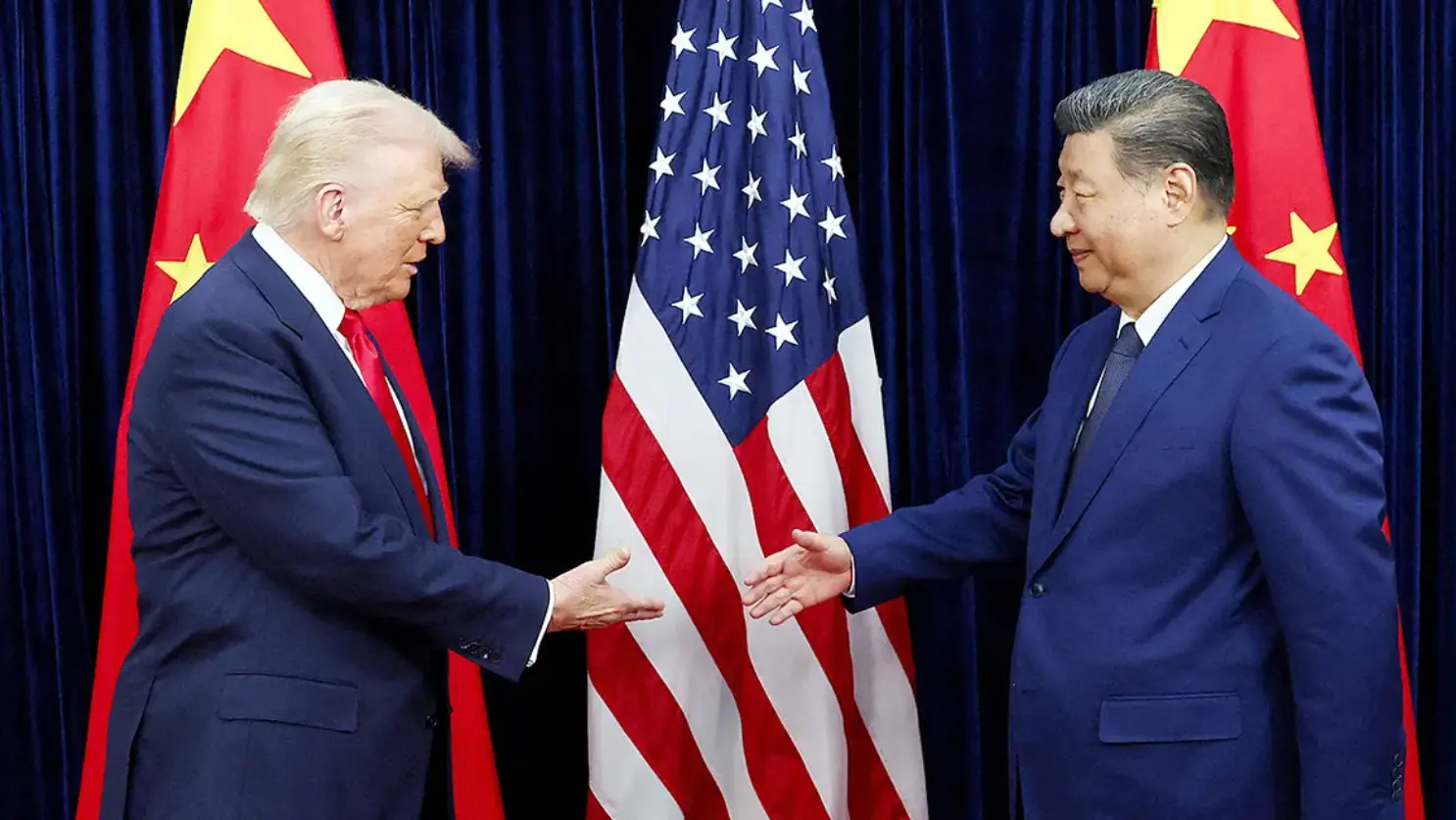
When Donald Trump came into power, he promised to be tough on China. He launched trade wars, imposed tariffs, and openly challenged Beijing in a way previous presidents had avoided. On the surface, it looked like a direct attack on China’s rise. But years later, the result is not so simple. Trump didn’t break China. In many ways, he forced it to adapt—and that may have made it stronger.
At the same time, China is far from unbeatable. Behind the headlines and bold statements, it is dealing with serious internal problems. So the real story is not about one side winning. It’s about how both countries are changing under pressure—and how the rest of the world is reacting.
America Started Looking Unstable
One of the biggest effects of Trump’s approach was not economic—it was psychological. The United States started to look unpredictable.
Trump often changed his tone quickly. He could praise a leader one week and attack them the next. He made strong threats, but didn’t always follow through. Over time, other countries noticed this pattern. They began to question whether the U.S. was still a reliable partner.
That matters more than it sounds. Global leadership is not just about military power or money. It’s about trust. If countries don’t trust you, they start looking for alternatives.
This is where Xi Jinping saw an opportunity. China began presenting itself as calm, steady, and focused on long-term cooperation. Whether or not that image is fully true, it has been effective. Compared to chaos, even a controlled system can look attractive.
Pressure Forced China to Get Smarter
Trump’s trade war hit China hard at first. Exports to the U.S. dropped, and businesses felt the pressure. But instead of collapsing, China adjusted.
It started selling more to other regions like Southeast Asia, Europe, and India. It invested more in its own technology and supply chains. It pushed companies to rely less on American markets and components.
In simple terms, China learned its lesson: depending too much on the U.S. is dangerous.
That lesson may be one of Trump’s biggest unintended gifts to China. The pressure didn’t destroy China—it made it more careful, more independent, and more prepared for future conflict.
China Has Powerful Tools of Its Own
China is not just reacting—it also has leverage.
One major example is rare earth materials. These are critical for modern technology, from smartphones to electric vehicles to advanced weapons. China dominates this supply chain, especially the refining process.
This gives Beijing a quiet but powerful weapon. It doesn’t need to fight directly. It can apply pressure by restricting key materials that industries depend on.
At the same time, China has built a massive industrial base. It can produce goods at scale and often at lower cost. That makes it hard for other countries to compete, even when they want to reduce dependence on China.
But China’s Problems Are Real—and Serious
Despite these strengths, China has deep economic issues that cannot be ignored.
Its growth is slowing down. For decades, China relied on building—more factories, more housing, more infrastructure. But this led to overbuilding. Now there are empty apartments, underused projects, and massive debt.
Local governments borrowed heavily. Real estate developers expanded too fast. The result is an economy that has too much supply and not enough demand.
This creates deflation, where prices fall instead of rise. That might sound good, but it’s actually dangerous. It can slow down spending, reduce wages, and make businesses weaker.
On top of that, many workers are struggling. Some are losing jobs or moving into unstable gig work. This creates social pressure inside China that economic growth alone cannot easily fix.
The World Is Pushing Back Too
China’s strategy of exporting more goods is not without consequences.
When China sells large amounts of cheap products abroad, it can hurt local industries in other countries. This is already causing tension in Europe, Southeast Asia, and beyond.
So while China is trying to reduce dependence on the U.S., it is creating new problems with other partners. These countries may trade with China, but they don’t fully trust it either.
In other words, China is gaining reach—but not necessarily deep loyalty.
China Still Avoids Global Responsibility
Another key weakness is China’s limited role in global security.
Unlike the U.S., China does not usually get involved in military conflicts far from home. It prefers to protect its economic interests without taking big risks.
For example, countries like Iran or Venezuela may rely on China economically, but China does not step in strongly to defend them. This sends a clear message: China is a partner, but not a protector.
This limits China’s ability to replace the U.S. as the world’s leading superpower. Being number one is not just about trade—it’s also about security and responsibility.
A Major Vulnerability: Energy
China also depends heavily on imported energy. A large portion of its oil passes through the Strait of Hormuz, one of the most important and fragile routes in the world.
If conflict disrupts that route, China faces a serious problem. It cannot easily replace that supply in the short term.
This shows a bigger truth: China is powerful, but still vulnerable in ways the U.S. is not.
Two Leaders, Two Very Different Styles
The rivalry between the U.S. and China is also shaped by leadership.
Trump’s style is direct, loud, and unpredictable. He focuses on quick wins and bold moves.
Xi’s style is controlled, patient, and long-term. He is willing to wait, adjust, and slowly build advantage over time.
In a short fight, Trump’s approach can be powerful. But in a long competition, patience often wins. China is playing a long game, and it is comfortable doing so.
The Real Outcome: A Divided World
So what is the final result of Trump’s actions?
He did not simply make China stronger or weaker. He changed the environment.
- He weakened trust in the U.S.
- He forced China to adapt and become more independent
- He exposed China’s internal weaknesses
- He increased global tension and uncertainty
But the biggest impact is on the rest of the world.
Most countries do not want to choose between the U.S. and China. They want trade with China and security ties with the U.S. They want flexibility.
This is why “hedging” has become the key strategy. Countries are trying to balance both sides, avoiding full commitment to either.