
For nearly three years, Western military aid to Ukraine has flowed overwhelmingly through a single, vulnerable corridor in Poland, leaving Kyiv’s forces exposed to the constant risk of logistical disruption. That long-standing bottleneck is now set to break.
Romania has stepped forward to host NATO’s second-largest strategic logistics hub supporting Ukraine, a move that fundamentally reshapes the architecture of Western military assistance and strengthens Ukraine’s ability to sustain high-intensity combat. The new hub, confirmed by Major General Mike Keller, Deputy Commander of NATO’s Security Assistance and Training for Ukraine, is expected to become operational by late January 2026.
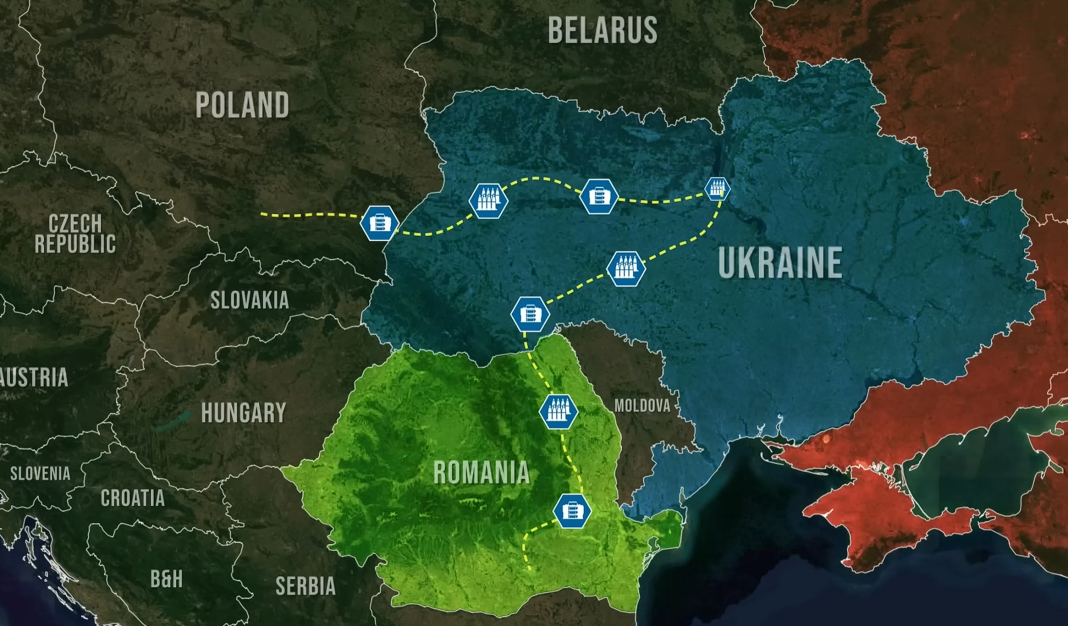
The Romanian facility will operate in parallel with the primary logistics hub in Zesanka, Poland, which has served as the main transit point for Western military aid since the start of the war. Under direct NATO command, the new hub will be integrated into NATO’s security assistance and training system for Ukraine, matching donor supplies to Ukraine’s most urgent operational needs, including artillery, air defense systems, and electronic warfare equipment.
The scale of this effort is substantial. In 2025 alone, NATO’s assistance system facilitated the delivery of approximately 220,000 tons of military aid to Ukraine, involving around 9,000 trucks, 1,800 railway wagons, and more than 500 strategic airlift flights. Romania’s participation dramatically expands this capacity, transforming the country from a supporting ally into a major strategic rear base on NATO’s eastern flank.
By increasing both volume and speed of deliveries, the Romanian hub is expected to reduce the delays that have periodically constrained Ukrainian operations. Critical supplies—such as air defense missiles, artillery shells, anti-tank weapons, and long-range strike capabilities—can be coordinated and delivered more efficiently. European-funded purchases of U.S. weapons, including those acquired through mechanisms such as PEARL, are also likely to reach Ukrainian forces faster, helping sustain combat operations while reducing risks to personnel caused by equipment shortages.
Perhaps most significantly, the new hub establishes a resilient southern logistics route, sharply reducing Ukraine’s dependence on a single Polish corridor. As Russia continues targeting Ukrainian supply lines and Western weapons transfers, this diversification enhances the overall security of NATO’s logistics network. By forcing Russia to divide its strike and intelligence efforts across multiple routes, the effectiveness of saturation attacks is diminished, even as Ukrainian air defenses are stretched.
A more complex and less predictable supply network also complicates Russian intelligence assessments, making it harder to identify vulnerabilities or disrupt deliveries through hybrid or escalatory actions. Over time, this improves the sustainability of Western support in what has become a protracted conflict.
Geography further amplifies Romania’s strategic value. Supplies transiting through the country can reach Ukraine’s eastern and southern fronts more directly, bolstering defenses and supporting operations in regions such as the Donbas and along the southern axis. Faster reinforcement of these sectors is critical as Ukraine seeks to counter Russian advances and maintain pressure on occupied territories.
Beyond immediate battlefield effects, Romania’s emergence as a major logistics hub signals a deepening and increasingly irreversible NATO commitment. The facility will also serve as a training ground for NATO personnel, offering real-world experience in sustaining a large-scale, ongoing war effort. Against the backdrop of Black Sea tensions and repeated airspace incidents, the hub underscores Romania’s growing role in safeguarding Ukraine’s lifeline.
In strategic terms, the shift is decisive. What was once a system vulnerable to disruption has evolved into a robust, multi-route network that significantly enhances Ukraine’s operational resilience. By anchoring a fortified rear base on NATO’s southern flank, Romania has helped transform Ukraine’s war effort from one constrained by logistics into one capable of sustained, multi-front operations.
The result is a higher cost for Russian escalation and a strengthened Western posture that makes attrition a far less viable strategy for Moscow. Romania’s decision has turned a fragile supply line into a durable logistics backbone—one that increasingly allows Ukraine to fight on its own terms and reshapes the long-term strategic balance of the war.