




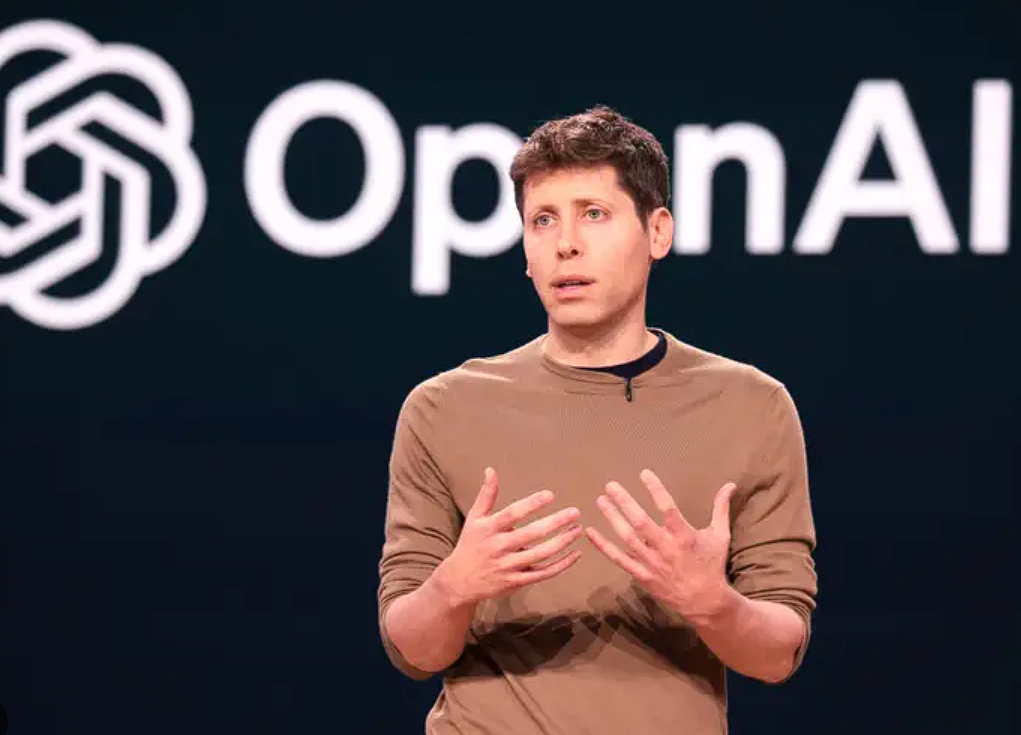
OpenAI says it plans to spend more than $1 trillion on artificial intelligence infrastructure over the next eight years, despite generating only about $13 billion a year in recurring revenue. That is less than one percent of what the company has promised to spend.
Even allowing for long-term contracts and future growth, the numbers should give anyone pause. This is not normal corporate risk-taking. It is a gamble of historic scale—one that the public is being asked to underwrite, whether it realizes it or not.
The justification for this gamble is a familiar one in Silicon Valley: trust us. Trust that once artificial intelligence becomes powerful enough, it will fix everything. Housing shortages. Cancer. Poverty. Climate change. Mental health. Democratic dysfunction. Energy scarcity. Even inequality itself.
It is a story as sweeping as it is convenient. And it is being used to justify an unprecedented concentration of resources, power, and decision-making in the hands of a few private companies.
The Faith-Based Economy
Much of the apparent growth in the U.S. economy in recent years has been driven by AI investment. Data centers, chips, energy infrastructure, and speculative startups have attracted enormous capital. But this growth rests less on demonstrated outcomes than on belief—belief that a technological breakthrough will arrive in time to make today’s spending look wise in hindsight.
This is not how healthy economies usually function. Historically, productivity gains follow proven technologies. Here, society is being asked to commit first and hope results follow later.
The deal on offer is stark: give AI companies your data, your energy, your water, your labor markets, and your tolerance for disruption now, and you may receive a transformed world later.
If that sounds like a leap of faith, it is.
The Messenger Matters
Sam Altman, OpenAI’s chief executive, is often presented as a visionary technologist. In reality, he is best understood as an investor and dealmaker—someone skilled at assembling capital, influence, and narratives around future potential.
There is nothing inherently wrong with that. But it becomes a problem when society is asked to suspend skepticism because of it.
Altman’s career has repeatedly relied on ambitious claims, limited transparency, and assurances that things will make sense in the long run. Critics argue that this pattern now extends to OpenAI itself: bold promises, extraordinary scale, and an expectation that the public will accept uncertainty as the price of progress.
When the stakes are this high, trust alone is not a governance model.
Centralizing the Future
Advanced AI requires vast physical resources. Enormous data centers consume electricity and water at levels comparable to cities. Training models depends on massive quantities of human-generated data—writing, art, research, and online activity—often collected without meaningful consent.
Once built, this infrastructure cannot easily be undone. It locks societies into particular technological paths and corporate dependencies.
Supporters argue the benefits will outweigh the costs. But if the promised breakthroughs fail to materialize, the public will still be left with the consequences: environmental strain, economic disruption, and a digital ecosystem shaped by systems that never delivered what they promised.
Energy, Jobs, and Risk
The industry’s response to its own energy demands has been to call for more power—far more. Executives openly discuss electricity needs on the scale of entire nations. Proposed solutions include nuclear and experimental energy technologies that remain unproven at the scale being discussed.
At the same time, AI-driven automation threatens to displace workers faster than governments and institutions are prepared to respond. While leaders insist new opportunities will emerge, concrete plans for mass transition, retraining, or income stability remain vague.
The pattern is consistent: costs are immediate and socialized, benefits are speculative and privatized.
A Decision Made Without Consent
Perhaps the most troubling aspect of the AI boom is how quietly it is unfolding. There has been no broad public debate over whether society wants to stake so much on this technology, or under what conditions. Instead, decisions are being made through investment flows, corporate contracts, and executive ambition.
This is not a conspiracy. It is a structural failure of governance.
The question is not whether artificial intelligence can be useful—it clearly can be. The question is whether any industry should be allowed to demand this level of trust, resources, and power without firm oversight and democratic accountability.
Trust Is Not a Plan
The AI industry insists that skepticism will slow progress. History suggests the opposite: unchecked optimism is what produces bubbles, backlash, and long-term damage.
A trillion-dollar bet demands more than confidence. It demands evidence, transparency, and limits.
Until those exist, society would be wise to treat sweeping AI promises not as inevitabilities, but as claims—claims that must be questioned before the bill comes due.
OpenAI’s evolution illustrates the problem. In 2019, the company created a for-profit arm, effectively abandoning its original nonprofit mission. In 2024, that for-profit entity was spun off entirely, free of any legal obligation to prioritize the public good. What remained was the language of altruism — paired with the incentives of a tech giant.
That shift unlocked enormous investment. Microsoft has poured roughly $13 billion into OpenAI, money that largely flows back to Microsoft through cloud and infrastructure spending. Nvidia has pledged hundreds of billions of dollars in investment, funds that OpenAI will use to buy Nvidia’s chips. Similar arrangements exist with AMD, Oracle, and even sovereign investors.
This is not a competitive marketplace discovering value. It is a circular system where capital flows in and then immediately flows back out to the same players — guaranteeing winners while spreading risk across society.
The justification for this spending is a sweeping promise: that sufficiently advanced AI will solve humanity’s hardest problems, from disease and climate change to poverty and inequality. But these claims remain speculative. What is not speculative are the costs: massive energy consumption, enormous data extraction, job displacement, and growing dependence on opaque systems controlled by private firms.
The public has never meaningfully consented to this tradeoff. There has been no democratic decision to commit vast amounts of electricity, water, land, and data to a handful of AI companies. The shift is happening quietly, through corporate contracts and government procurement, until dependency becomes unavoidable.