




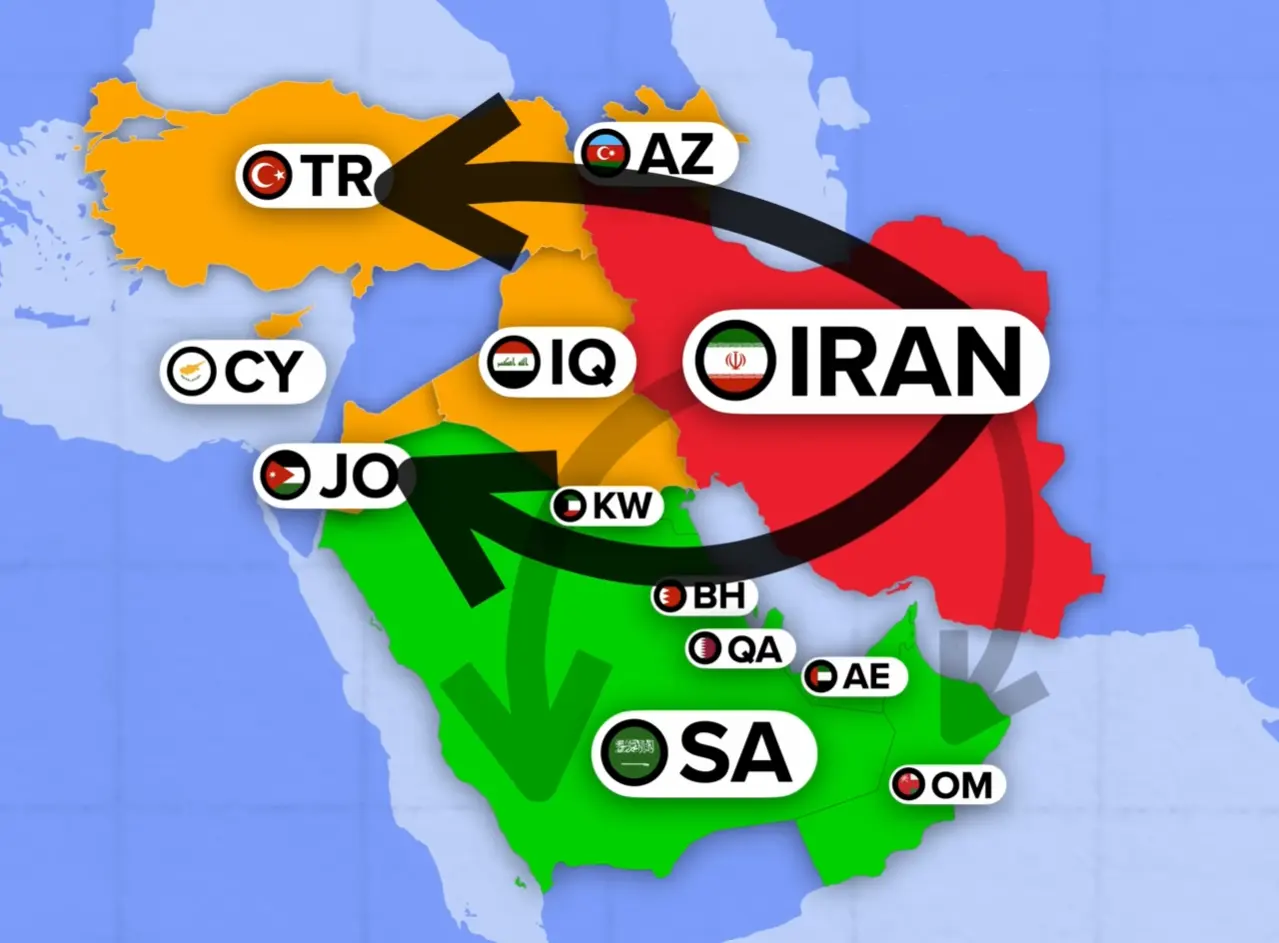
Regional tensions pull in multiple countries and military forces
Growing conflict in the Middle East and Eastern Europe has intensified concerns among analysts and policymakers that regional wars may be becoming increasingly interconnected. As tensions escalate between the United States, Israel, and Iran, the involvement of numerous countries across Europe, the Middle East, and Asia is fueling debate about the possibility of a broader international confrontation.
Over the past weeks, the crisis has expanded beyond the immediate parties involved. Several states in the Gulf region—including Saudi Arabia, Kuwait, Bahrain, Qatar, United Arab Emirates, and Oman—have reported threats to military installations and energy infrastructure. Regional governments have heightened their security responses amid fears that the conflict could spread further across the Middle East.
Countries bordering the region, such as Jordan, Iraq, Turkey, and Azerbaijan, are also closely monitoring the situation. These states occupy strategically important positions and could be affected by disruptions to trade routes, energy infrastructure, or security arrangements.
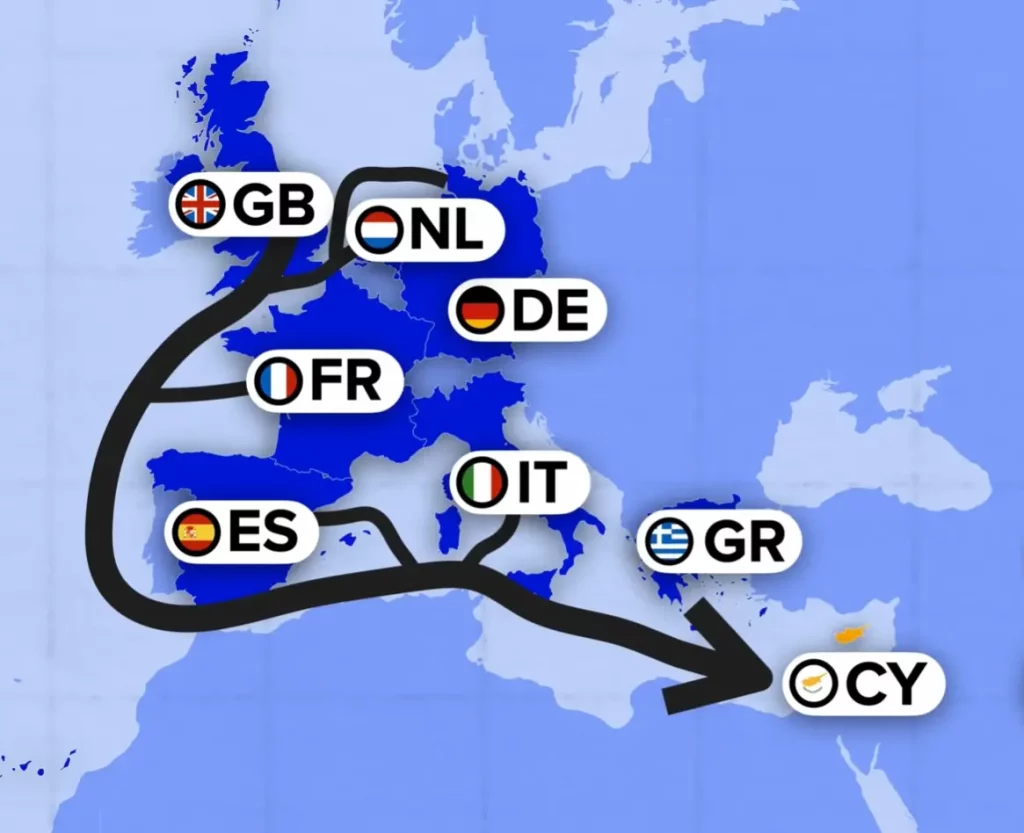
European Naval Buildup in the Mediterranean
Meanwhile, several European nations have increased their military presence in the Eastern Mediterranean. Naval deployments from the United Kingdom, France, Germany, Italy, Spain, Greece, and the Netherlands have been sent toward waters near Cyprus. Officials describe the deployments as precautionary measures designed to protect shipping lanes, military facilities, and allied personnel.
Two Conflicts Becoming Increasingly Linked
The conflict is unfolding against the backdrop of the ongoing Russia–Ukraine War, which continues to reshape global security dynamics. Analysts say the overlap between these crises highlights how modern warfare increasingly involves multiple regions and actors. Reports suggest that technological knowledge gained during the Ukraine conflict—particularly in drone warfare and air defense—has influenced strategies used in the Middle East.
Military experts note that this overlap creates a complex web of geopolitical tensions. Major powers such as the United States and Russia already find themselves on opposing sides of strategic disputes. The addition of another major regional conflict risks deepening rivalries and complicating diplomatic efforts to reduce tensions.
At the same time, governments around the world are reassessing their alliances and security partnerships. Some Middle Eastern countries have sought to strengthen defense cooperation with neighboring states, while others have expanded ties with global powers. These shifts reflect growing uncertainty about the future stability of the international system.
Security analysts often compare today’s geopolitical environment with the period preceding World War I, when a network of alliances gradually pulled many nations into a single global conflict. While the circumstances today are different, the comparison reflects concerns that overlapping commitments could make it harder to contain regional crises.
Nuclear Deterrence Still a Key Barrier
Despite these fears, many experts believe that several factors still reduce the likelihood of a direct global war. The existence of nuclear weapons among major powers—including the United States, Russia, China, France, and the United Kingdom—has historically acted as a deterrent against large-scale conflict between major states.
During the Cold War, this nuclear deterrence prevented direct military confrontation between superpowers despite intense political and ideological rivalry.
Nevertheless, the current environment remains unpredictable. Modern warfare increasingly involves cyber operations, unmanned drones, proxy militias, and rapid retaliatory strikes. Such dynamics raise the risk that a localized incident could escalate quickly before diplomatic channels have time to intervene.
For policymakers, the challenge now lies in preventing multiple regional conflicts from converging into a broader global crisis. Diplomatic engagement, conflict management, and international cooperation will likely play critical roles in determining whether current tensions remain contained or expand further.
Leaders face pressure to prevent escalation
Even with nuclear deterrence acting as a restraint, the current international environment remains unpredictable. Modern warfare increasingly involves drones, cyber operations, proxy militias, and rapid retaliation capabilities—factors that can accelerate escalation in ways that are difficult to control.
For policymakers, the challenge now lies in preventing multiple regional conflicts from merging into a broader global crisis. Diplomatic engagement, crisis management, and international cooperation will likely determine whether current tensions remain contained.
History offers a clear warning. From World War I to World War II, global conflicts have often begun with smaller crises that leaders failed to resolve in time.
Whether today’s tensions follow a similar path—or are successfully defused—may shape the course of international politics for years to come.