




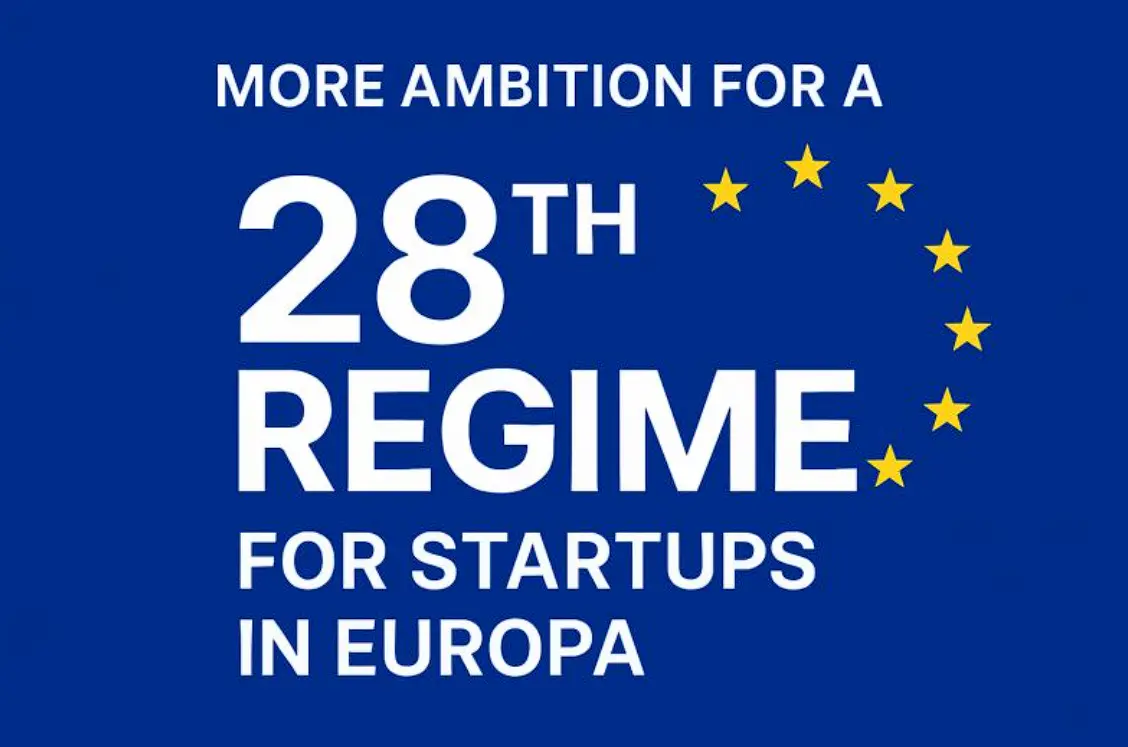
Europe’s single market is its greatest economic asset, yet it remains deeply fragmented by a patchwork of 27 company laws, tax systems, accounting regimes, and labour rules. This fragmentation increases compliance costs, creates legal uncertainty, and constrains growth—effects felt most acutely by SMEs, start-ups, and scale-ups.
To address these challenges, the European Commission is developing a “28th regime”: a unified, optional legal framework operating alongside national systems. Its objective is straightforward—to offer companies a simplified and predictable legal environment for operating across the EU, without replacing national laws.
Rationale and design
The promise of the 28th regime is significant, but its success depends on careful design. Key questions include the scale of potential economic gains from reduced transaction and compliance costs, its effectiveness in supporting SMEs and attracting international investors, and how to address legitimate concerns related to national sovereignty and regulatory competition.
Lessons from past initiatives suggest that ambition alone is insufficient. A credible 28th regime must meet three core conditions: it must be voluntary for businesses, mandatory for Member States to offer, and clearly delimited to avoid duplication with areas already extensively harmonised at EU level.
To maximise impact and manage risk, the initiative should follow a layered and progressive rollout, starting where economic returns are highest—business law:
- First layer: an EU-wide company incorporation and governance framework
- Second layer: optional tax coordination tools to reduce cross-border complexity
- Third layer: simplified reporting through a European accounting board working with national authorities
More sensitive areas, such as insolvency and labour law, should be considered only once the regime has demonstrated clear added value.
Political context
The 28th regime is firmly embedded in the EU’s current political agenda. The Commission’s 2024–2029 Political Guidelines and the mission letter of the Commissioner for Democracy, Justice and the Rule of Law place competitiveness and scale-up capacity at the centre of EU action. The January 2025 Competitiveness Compass announced the development of a 28th regime to allow innovative companies to operate under a single, optional set of EU-wide rules.
This approach was endorsed by the March 2025 European Council, which invited the Commission to propose an optional 28th company law regime to support scaling up, in line with the Treaties. Further backing comes from the Savings and Investments Union Communication, the Single Market Strategy, and the Start-up and Scale-up Strategy, all of which highlight the role of the 28th regime in mobilising private investment, reducing fragmentation, and strengthening the Single Market.
The regime is envisaged as a modular, digital-by-default framework, beginning with corporate law and potentially extending to targeted aspects of insolvency, labour, and tax law. It will complement other EU initiatives, including the European Innovation Act and the European Business Wallet.
Problem definition
The initiative addresses the persistent fragmentation of company law across Member States, which increases costs, complexity, and uncertainty for businesses operating cross-border. Divergent national rules on company formation, governance, and operation hinder investment and prevent start-ups and scale-ups from growing at EU level.
Businesses report high administrative burdens, limited digitalisation, and duplicative reporting requirements. Investors face legal complexity and higher transaction costs, while the absence of a recognisable and trusted EU company form undermines confidence and cross-border investment. The result is forgone economic potential within the Single Market.
Likely impacts
The 28th regime is expected to benefit companies across the EU—particularly SMEs, start-ups, scale-ups, and innovative firms—by providing a simplified and harmonised framework for company formation, operation, and investment. Digital-by-default procedures will make it faster and easier to establish businesses and attract capital.
By reducing administrative burdens, legal complexity, and compliance costs, the initiative will strengthen companies’ ability to scale up across borders. Investors, including venture capital firms, will benefit from clearer, more standardised and digitalised processes, facilitating cross-border investment. Overall, the initiative is expected to support economic growth, innovation, job creation, and enhance the EU’s global competitiveness.
Impact assessment and next steps
An impact assessment will be carried out to support the development of the initiative and inform the Commission’s decision-making. Adoption of the legal proposal is envisaged in Q1 2026.
Conclusion
Europe has long struggled to reconcile unity with diversity. The 28th regime offers a path forward—not through imposed harmonisation, but through voluntary convergence. It preserves national sovereignty while giving ambitious companies the freedom to operate at continental scale.
Europe cannot afford another decade of fragmentation disguised as integration. It is time to finish what it started.