




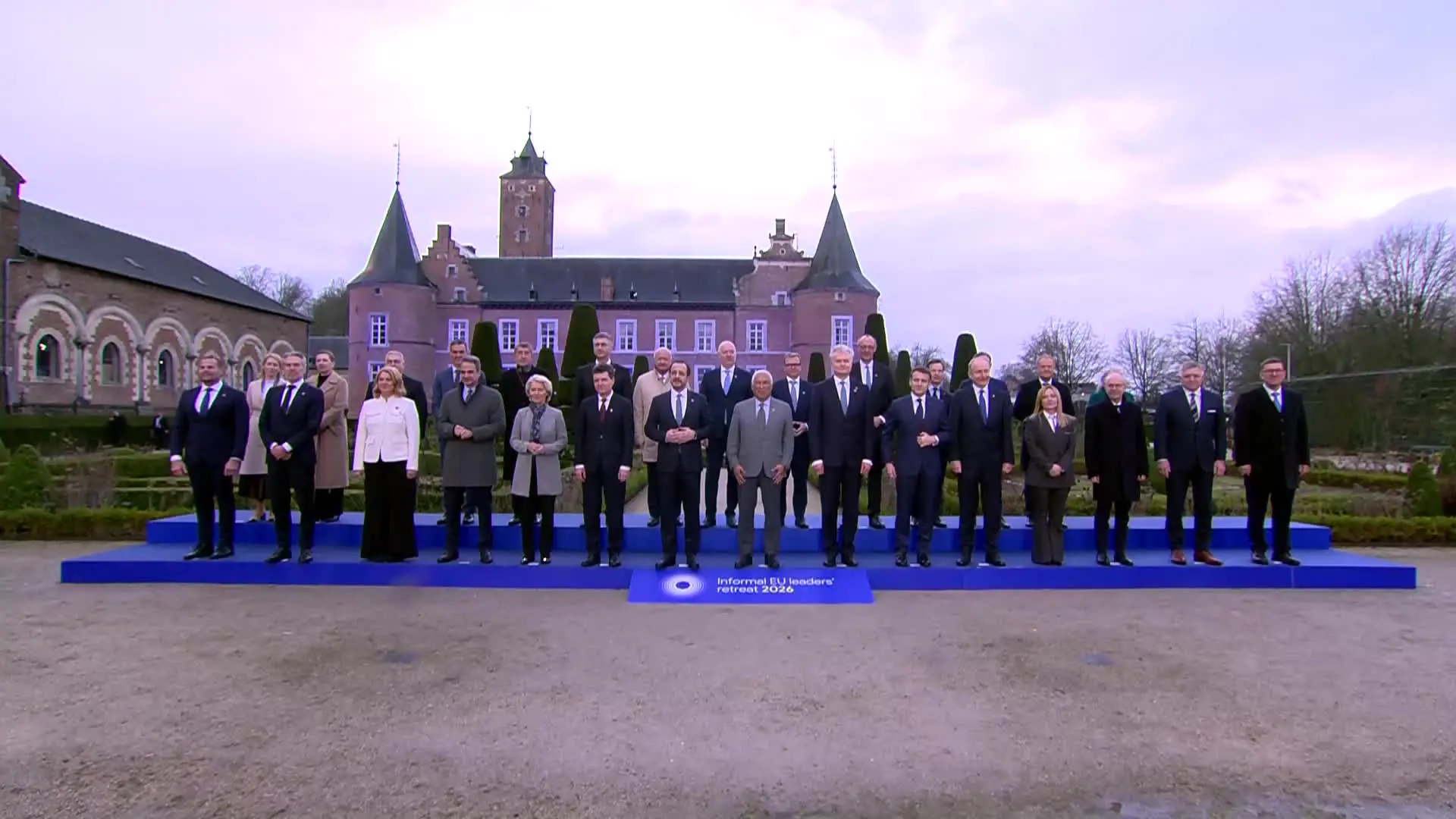
BRUSSELS – In a move signaling a seismic shift in European economic philosophy, EU leaders last week formally endorsed a sweeping “Made in Europe” industrial plan, aiming to significantly reduce the bloc’s reliance on foreign powers in critical sectors. The initiative, championed by France for over a decade and now embraced by a newly anxious Germany, marks a decisive turn away from the EU’s long-standing commitment to unfettered free trade.
The proposed “Industrial Accelerator Act,” slated for formal introduction on February 25th, seeks to raise manufacturing’s share of the EU economy from 14% to 20% by 2035. Its cornerstone provisions include establishing minimum thresholds for European-made components in strategically vital technologies such as renewables, batteries, and electric vehicles, with some critical sectors potentially facing local content requirements as high as 70% as a condition for public subsidies.
“China has ‘Made in China,’ the US has ‘Buy American,’ Canada has ‘Buy Canadian’,” declared Thierry Breton, the EU’s Commissioner for the Internal Market, echoing a sentiment that has galvanized support across the continent. “It’s time for Europe to stand up for itself and adopt a similar scheme.”
From Idealism to Pragmatism: A Decade in the Making
The journey to this protectionist pivot has been long and often contentious. French President Emmanuel Macron’s 2017 “Sorbonne speech” laid the intellectual groundwork for “European sovereignty,” advocating for reduced dependency in defense, energy, and technology. Yet, for years, these proposals met resistance, primarily from Germany, a staunch proponent of free trade and a nation whose industrial prowess was built on exports.
The turning point, observers agree, was Russia’s full-scale invasion of Ukraine in 2022. The ensuing energy crisis brutally exposed Europe’s vulnerability, particularly Germany’s energy-intensive manufacturing base, which had grown reliant on cheap Russian gas. Simultaneously, a flood of inexpensive Chinese products, from solar panels to electric vehicles, intensified anxieties about de-industrialization, pushing Germany to reconsider its traditional stance.
“The war laid bare the extent to which large parts of Europe’s manufacturing base depended on cheap Russian gas,” noted one EU analyst. “Combined with growing protectionism globally and increased competition from China, Germany’s industrial backbone felt genuinely threatened. The ‘Buy European’ idea suddenly didn’t seem so radical.”
Internal Divisions and the “Made With Europe” Counter-Proposal
Despite the newfound consensus, significant internal divisions remain. German Chancellor Friedrich Merz advocates for a broader “Made with Europe” approach, which would extend participation to European Economic Area (EEA) countries like Norway and Iceland, and potentially even other “like-minded” trading partners. Merz and other export-oriented economies, particularly in Scandinavia and the Baltics, warn that overly narrow rules risk creating protectionist barriers, stifling trade, pushing up costs, and alienating crucial allies.
“The plan completely goes against the very principles of the single market by restricting free trade,” cautioned a diplomat from a Baltic state, reflecting widespread concerns that forcing European companies to use higher-priced European components could stoke inflation and deter investment. These critics argue that the EU should instead focus on internal reforms, such as removing intra-EU trade barriers and merging capital markets, to enhance overall competitiveness.
The Future of European Industry
Nevertheless, the momentum behind some form of “Made in Europe” policy appears irreversible. The prevalence of similar measures in the US (“Buy American”) and China (“Made in China 2025”) has created a global landscape where strategic industrial policy is increasingly seen as a necessity rather than an exception.
As the February 25th deadline approaches, all eyes will be on the specifics of the Industrial Accelerator Act. The delicate balance between fostering strategic autonomy and avoiding crippling protectionism will define Europe’s economic trajectory for decades to come. The question now is not if Europe will build its fortress, but how high its walls will be, and who will be invited inside.