




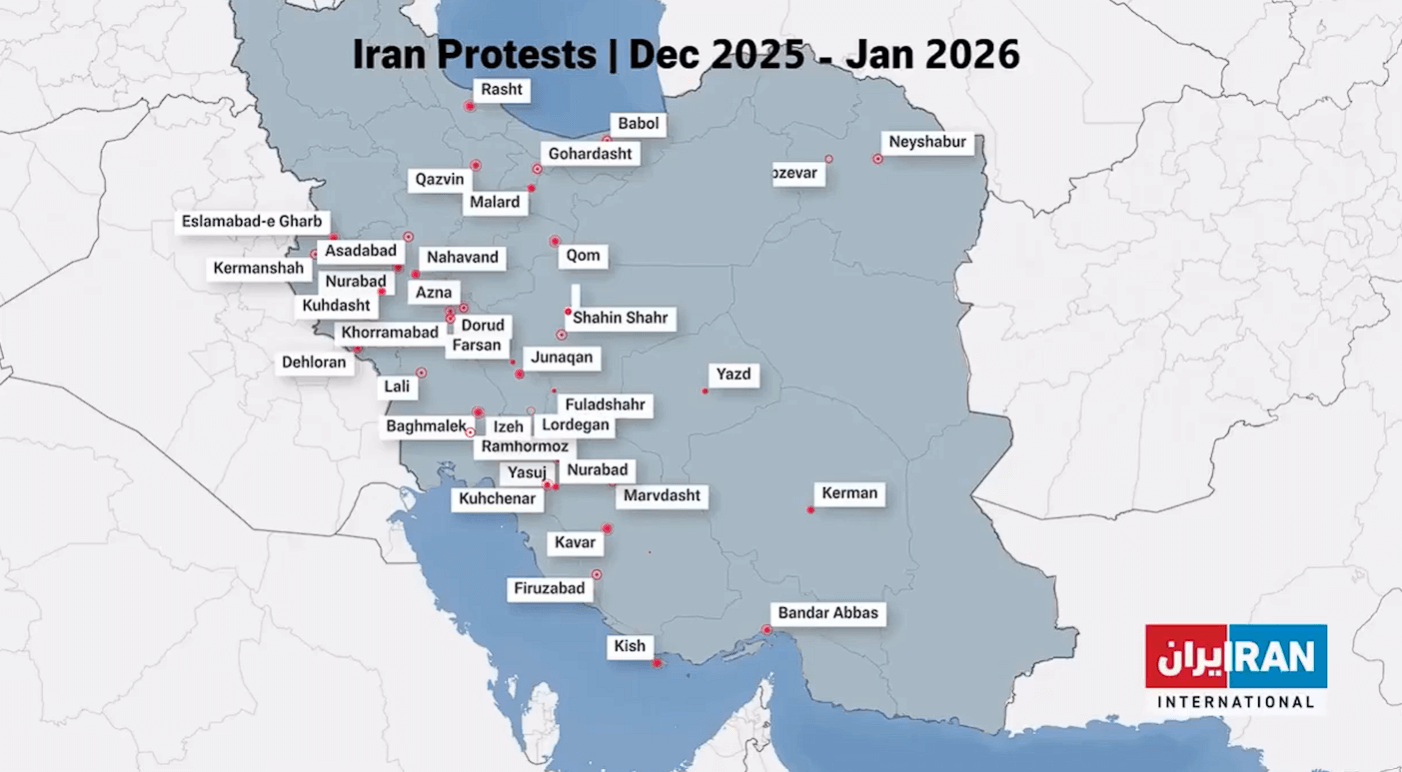
Iran is once again in the grip of protests, and once again the government is responding with force. What started as anger over money has turned into something much deeper: a nationwide expression of frustration with a system that many Iranians no longer believe works for them.
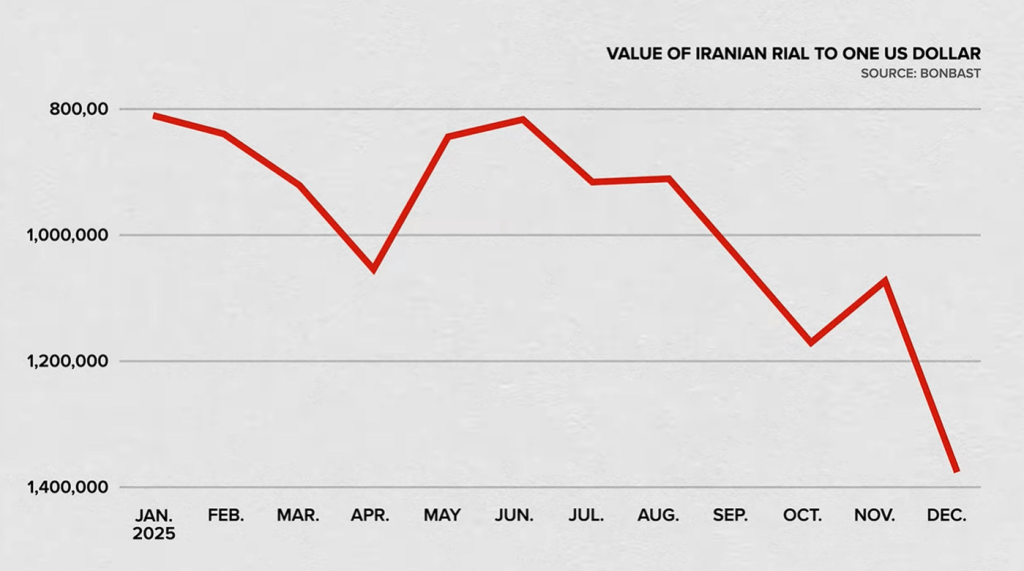
The immediate trigger was the collapse of Iran’s currency. In just a few months, the rial lost a huge chunk of its value. For people inside the country, this isn’t an abstract economic problem. It means food costs more every week, medicines are harder to find, rents rise while wages don’t, and savings disappear. Inflation is already close to 50 percent. For millions of families, daily life has become a constant struggle.
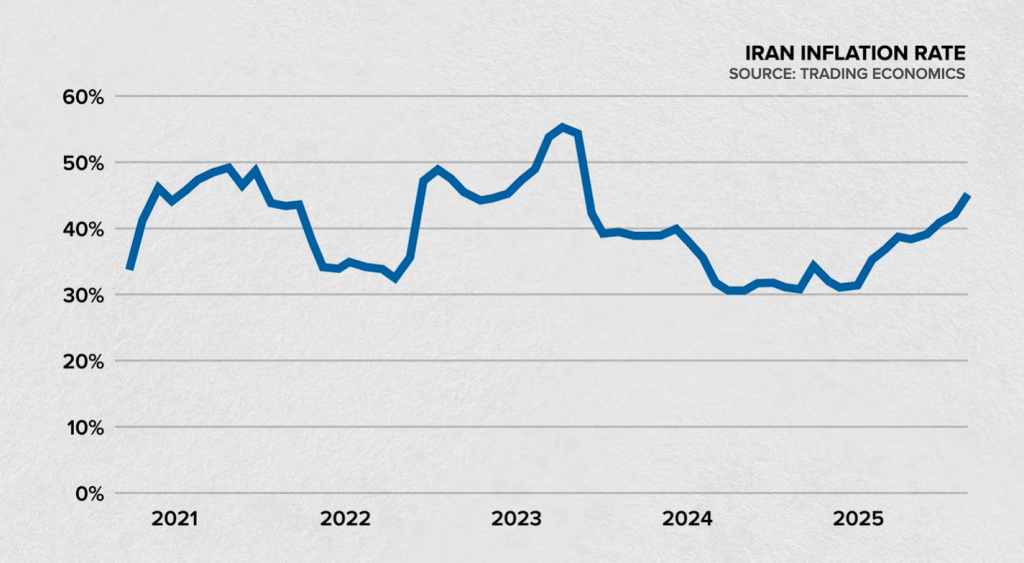
But the protests weren’t just about prices. They were also about fairness. Many small shop owners and traders believe the government deliberately allowed the currency to fall to protect big exporters and state-linked companies. Those larger players earn dollars and euros, while smaller businesses depend on imports that suddenly became far more expensive. When protests broke out in Tehran’s Grand Bazaar, it was a serious warning sign. Merchants have long been a key support base for the Islamic Republic. Losing them matters.
At first, the demonstrations were limited and mostly peaceful. People gathered in markets and universities, shouting about jobs, corruption, and the cost of living. This looked familiar. Iran has seen protests like this before, and the regime has learned how to wait them out.
A Regime Losing Control and Credibility
Deaths changed everything. Funerals for killed protesters turned into new demonstrations. Anger spread from small towns into major cities. Videos began to circulate showing clashes in Tehran and other urban centers. Within days, protests had reached nearly every major city in the country. What began as an economic complaint started to look like a political revolt.
This pattern is not new. Iran has experienced wave after wave of protests since the late 2000s. In 2009, people protested a disputed election. In 2018 and 2019, they protested economic mismanagement. After the death of Mahsa Amini, protests openly challenged the regime itself. Each time, outsiders talked about the system collapsing. Each time, the state responded with violence and survived.
That history matters. The Iranian government is ruthless, well-organized, and willing to kill to stay in power. It has proven this again and again. Anyone claiming that regime change is inevitable is ignoring the past.
A Currency Crash That Broke Daily Life
The biggest change is that the regime’s main excuse no longer works. For decades, Iran’s leaders told people that repression, poverty, and isolation were the price of security. The country, they said, needed strong rule to defend itself against the United States and Israel. But over the past year, that claim has collapsed. Iran failed to protect its allies. Its regional influence weakened. It could not stop foreign strikes. The promise of strength now looks like an empty one.
At the same time, the people at the top are starting to argue with each other in public. Hardliners want more repression and faster moves toward nuclear weapons. Others quietly admit that the strategy has failed and that sanctions relief and compromise may be the only way forward. When leaders stop speaking with one voice, it’s a sign that pressure is building inside the system.
Even the tone from officials has shifted. The Supreme Leader talks about crushing “rioters.” The president, by contrast, admits he doesn’t have clear solutions and says leaders must listen to the public. That gap matters. It shows a government that knows it has lost credibility.
None of this guarantees success for the protesters. Fear is still powerful. The security services are still loyal. The internet can still be shut down. The prisons are still full.
But the direction of travel is worrying for the regime. The economy is shrinking. Young people see no future. Old promises no longer convince. Violence still works, but it works for a shorter time each round.
Iran’s rulers have survived many storms. This one may not topple them either. But it is stripping away what little legitimacy they had left. And once a government is seen as both cruel and incompetent, holding power becomes much harder.
The protests may fade. Or they may grow. Either way, the message from the streets is clear: the system is failing, and more and more Iranians know it.