




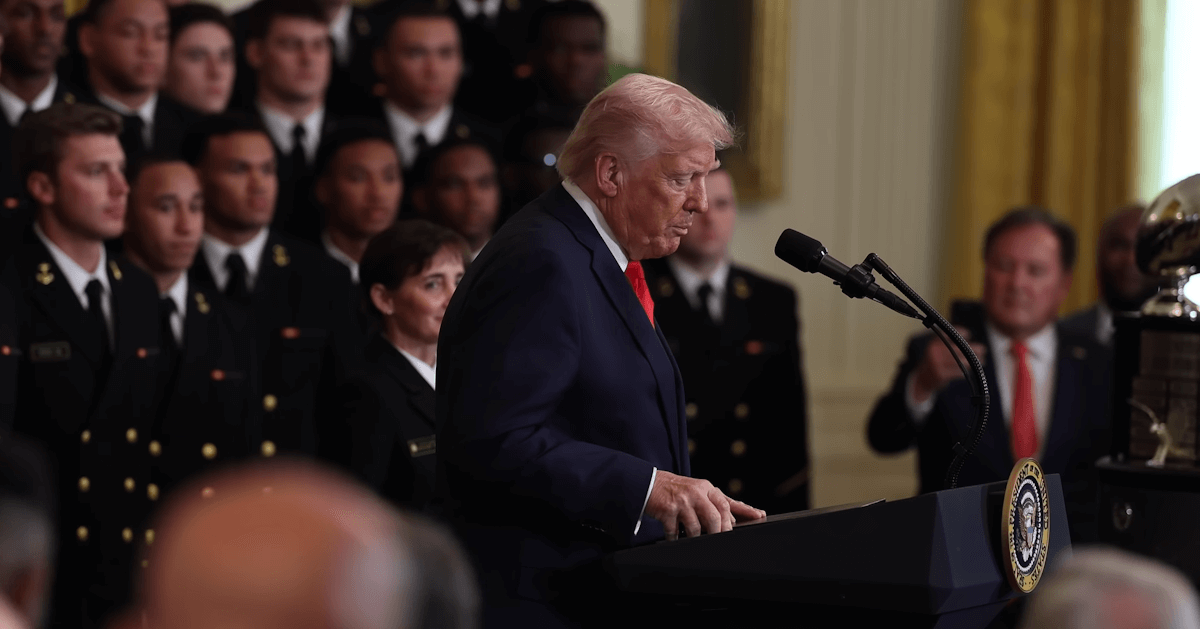
During the 2024 election campaign, Donald Trump promised Americans an end to the “Forever Wars.” He said the United States would stop acting like the world’s police, pull back from foreign conflicts, and finally put “America First.” For voters tired of endless military adventures, this message landed hard.
But a year into his term, it’s getting harder to see how those promises match reality.
Instead of stepping back from global conflict, the United States has stepped deeper into it. Trump has not brought peace to Ukraine. He has ordered or approved military strikes in Iran, Yemen, Iraq, Syria, Somalia, Nigeria, and Venezuela. On top of that, he has openly threatened military action against several more countries. This does not look like restraint. It looks like escalation.
Supporters might argue that these actions are limited, defensive, or necessary. But taken together, they paint a clear picture: this administration is comfortable using force, often quickly, and often without much regard for international norms or long-term consequences.
What’s especially troubling is how casually Trump and his senior officials talk about war. When the president jokes that attacking another country “sounds good,” or when senior cabinet members hint that foreign governments should be “concerned,” it lowers the bar for violence. War becomes just another policy option, not a last resort.
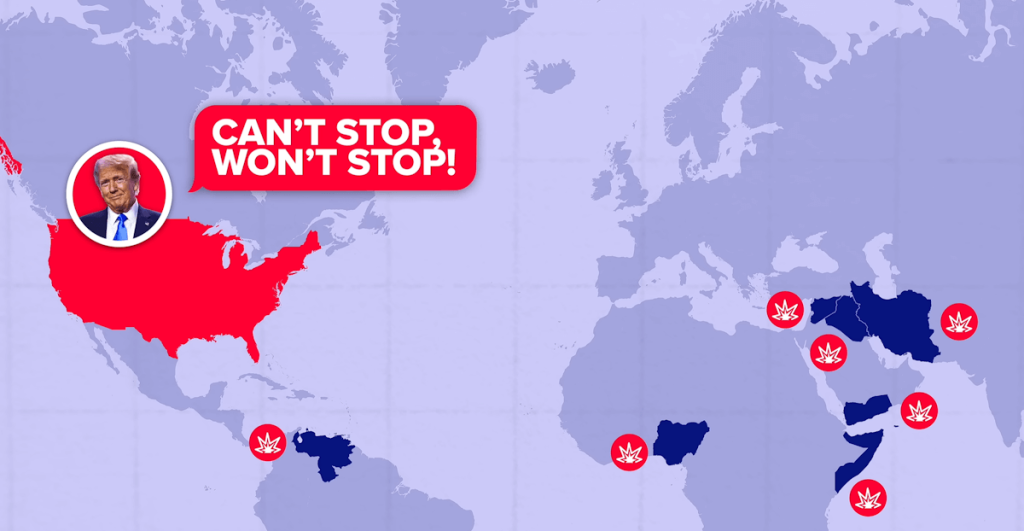
Latin America is a clear example. Trump has revived a mindset that many hoped was dead: the idea that the United States has a special right to intervene in its southern neighbors whenever it dislikes their governments. Cuba, Colombia, Mexico, Nicaragua, and Venezuela are all spoken about not as sovereign countries, but as problems to be dealt with. That kind of thinking has a long and ugly history, and it rarely ends well.
The situation with Cuba shows how cruel this approach can be. Cuba is already struggling with fuel shortages, blackouts, and a weak economy. Squeezing it further by cutting off energy supplies isn’t about helping ordinary Cubans. It’s about forcing political change through suffering. History suggests that strategy hurts civilians far more than it hurts the people in power.
Then there’s Iran. Trump insists his strikes “obliterated” Iran’s nuclear program, yet reports suggest otherwise. Now the administration is hinting at further attacks, while Iran blocks inspectors and tensions keep rising. This is how wars start: not with one dramatic decision, but with a series of small, aggressive steps that leave everyone with fewer good options.
Greenland next on the map?
Perhaps the most alarming case is Greenland. The idea that the United States might use military force to take territory from a NATO ally should shock people across the political spectrum. Even floating that possibility undermines trust between allies and weakens the alliances the US depends on for its own security.
All of this points to a deeper problem. Trump’s foreign policy seems less guided by clear principles and more by impulse, grievance, and displays of strength. Sovereignty matters when it protects American power, but not when it gets in the way. International law matters when others break it, but not when the US does.
For Americans, this should raise serious questions. Endless military involvement costs money, costs credibility, and most importantly, costs lives. It creates new enemies faster than it solves old problems. And it distracts from real issues at home that no airstrike can fix.
For the rest of the world, the lesson is even starker. If the most powerful country on Earth treats borders and sovereignty as optional, smaller and weaker states have every reason to worry.
Ending the Forever Wars was a powerful promise. But promises don’t matter if actions point in the opposite direction. Right now, Trump’s record suggests not a retreat from global conflict, but a more unpredictable and dangerous version of it.